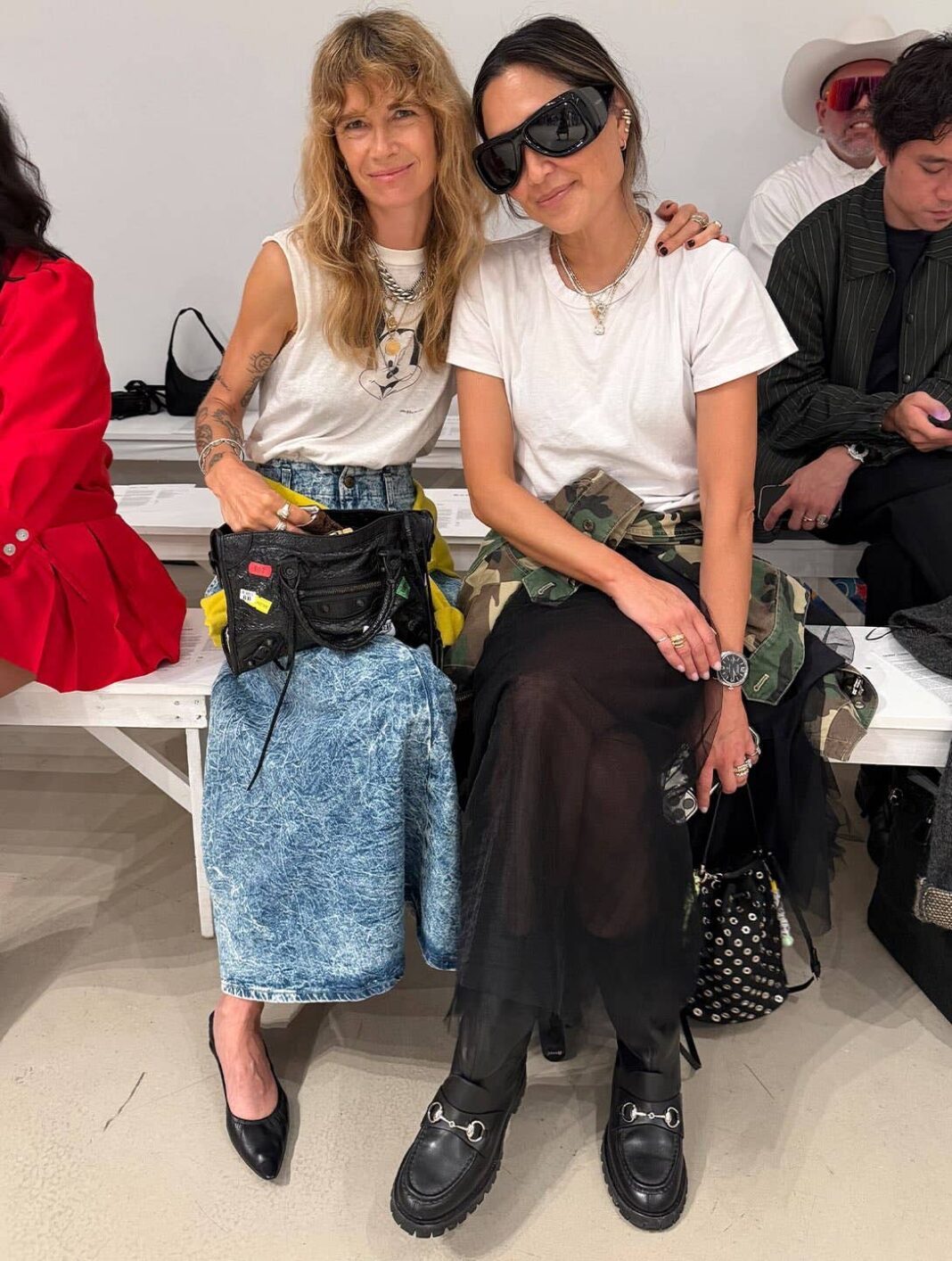
Many aspiring fashion professionals enter this industry out of love for product, not design (an important distinction). That leads them to careers in buying, planning or product development. Others, however, may have a bigger end goal in mind. That is, becoming a fashion director.
From the outside looking in, a fashion director’s life seems glamorous: They travel to international fashion weeks, attend market appointments with esteemed designers and make executive decisions on what product makes it from the runway to the retail floor. But as David Thielebeule, fashion director at Bloomingdale’s, tells Fashionista, there’s much more work than it seems.
“The reality is that most of my time is spent in the office,” he explains. “For every fashion show, there are countless meetings, calls and decisions to be made. At the end of the day, it is a business.”
A fashion director’s main purpose is to bridge marketing, branding, partnerships and buying. They translate fashion trends into digestible ideas that consumers can relate to. Or, as Caroline Maguire, senior fashion director at Shopbop, describes it, “We take these great fashion trend ideas and edit them through the Shopbop lens so our customers can understand how they can take what we’re speaking to them and make it their own.”
So what does that mean for day-to-day responsibilities? It varies by company. At Bloomingdale’s, Thielebeule works alongside merchants to identify trends and designers, collaborates with the marketing and visuals teams for special projects and has a direct hand in seasonal campaigns. “No two days are quite the same, which is one of the things I like most about the role,” he says.
Brooke Bobb, vice president and fashion director at Nordstrom, agrees that each day brings something new. Given she’s only three months into her role, she’s still finding her footing. But so far, the company’s collaborative culture has made the transition easy. She largely works across teams to identify trends, create decks, develop marketing campaigns and shape consumer messaging. “[Fashion directors] help to inform the way that our product is curated and the way that it shows up across stores, online and in some of the printed material that we do,” Bobb explains. “We are informing trends and we are directing our buyers around what products fit into those trends.”
Over at Shopbop, Maguire emphasizes that the retailer’s customers are already trend-driven, so it’s her job to update the website with the latest items to invest in. In addition to the popular “What’s New” tab, Maguire also oversees her “Caroline’s Closet” edit. “I do all of my own pulls,” she says of the edit. “My team helps me and we also shoot social content for this at least twice a month.”
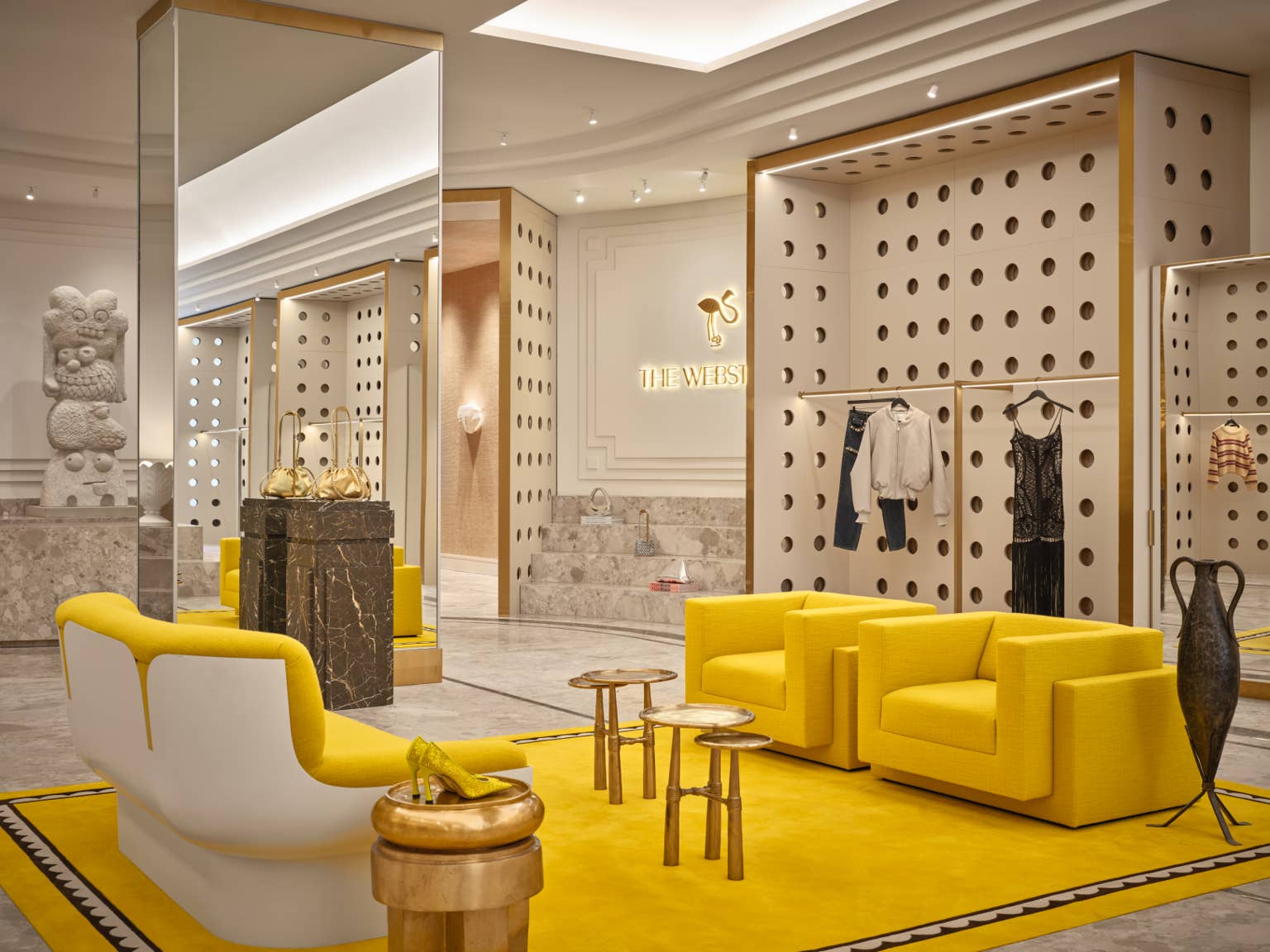
Meanwhile, Astrid Boutrot, women’s buying and fashion director at The Webster, juggles both the buying office and fashion office. She’s not only working on promotional campaigns, meeting with brands and analyzing trends at fashion shows, but also making purchasing decisions, tracking sell-through rates and reviewing inventory levels.
“I’m really at the beginning of the buying process,” Boutrot says. “Then when we have all the products and trends, how do we digest that and help the team internally to push the products and trends we believe in as The Webster for our clients and make sure that we have clear communication?”
But what is the exact roadmap to landing a fashion director gig? Ahead, Boutrot, Maguire, Thielebeule and Bobb share more about what it took to get their positions, the skills and experience needed to succeed, advice for aspiring hopefuls and more.
Education and Early Career
Both Thielebeule and Bobb came from the editorial field. After the former graduated from Florida State University with a Bachelor of Science in Merchandising (and minors in Political Science and Business), he landed a brief stint in buying at Saks Fifth Avenue. Shortly after, he pivoted into magazines: His first job was a sittings assistant at GQ, followed by editor titles at Harper’s Bazaar, accessories director at Allure, style director at The Wall Street Journal and editor in chief at Grazia USA.
But he had an itch for retail. “Even when I was working in editorial, I always loved finding myself seated next to a retailer at a dinner or show,” he says. “I was fascinated by what was actually selling, what customers were really into and how that differed from the editorial conversation.”
So in 2024, he took on his current role at Bloomingdale’s. “The company was on a journey to elevate its fashion offering, and having spent eight years at WSJ. Magazine working closely with the world’s biggest luxury brands and creatives, I felt I could bring a valuable perspective,” he adds.
Bobb’s career path wasn’t as linear: At Boston University, she studied mass communications, which helped her develop a multi-pronged skill set. Post-graduation, she took on a couple of paid internships in luxury advertising and public relations. Her first full-time job was working at Stylist, AOL’s fashion vertical. From there, she went on to work as the editorial assistant at Du Jour Magazine. She continued climbing the media ladder, including landing gigs at T Magazine and Vogue. “That’s where I really learned how to be a writer and to find my voice,” she says of the latter. “I really delved into experiencing and communicating fashion in different ways, whether it was doing runway reviews, discovering and amplifying a new designer, talking to creative directors, or analyzing a trend.”
Then, in 2021, she made an unexpected switch and worked at Amazon as senior content editor of Amazon Fashion. “Amazon was really putting a lot of money and effort into trying to ramp up a luxury fashion business, and so they built out luxury stores, and I was brought on as part of a very small team to brand it,” she recalls. “That was a bootcamp moment for me in terms of retail and learning what it takes.” During the two-year-long stint, she helped build a brand book, create a vision and voice for the business, execute campaigns and create an ambassador program.
Eventually, she returned to editorial and landed a job as Harper’s Bazaar’s fashion news director. Three years later, Nordstrom’s fashion director gig came her way, and she knew she couldn’t pass it up. “I still had a huge desire to want to learn more about the business side of fashion and connect with consumers and customers in a very real, tangible way,” Bobb says of joining Nordstrom. “This role was a dream job and is a dream job.”
But editorial isn’t the only path to becoming a fashion director. Maguire and Boutrot both come from traditional retail backgrounds: Maguire, who has a communications degree from the University of Southern California, applied to and was accepted into Macy’s Executive Development Program shortly after graduating. She got hands-on experience on the store floor and in the buying and planning offices. She stayed with Macy’s for a little over seven years, until 2008, when she was appointed Bloomingdale’s fashion director.
“It was a brand new position. Dot com was brand new, and it was going to explode. So I really helped shape the editorial fashion direction for Bloomingdales.com from that point,” she says. “It was scrappy, but I loved it.” Fast forward to 2012, she jumped over to Bergdorf Goodman as its contemporary fashion director; then in 2016, she took on her current role at Shopbop. “Across all these roles, I’ve developed a stronger fashion perspective and such a deep understanding of the customer,” she reflects.
Meanwhile, The Webster didn’t even have a fashion director position before appointing Boutrot. The French retail executive got her start as a wholesale and retail coordinator at Paul Smith, then worked in sales and wholesale at Givenchy. In 2015, she had the opportunity to move from Paris to Miami, but wasn’t sure where she would work. “The Miami of then was not the Miami of today,” she reflects. “The true fashion luxury [industry there] was not so developed.” However, she remembered Miami-based luxury retailer The Webster, as it was one of Givenchy’s clients.
Long story short, she reached out to its founder, Laure Hériard Dubreuil, asked for a senior buyer position and was hired. At the time, The Webster was still in its early growth stages with only two physical stores open and little-to-no online presence. It was after the company slowly scaled — the company now has ten locations across the U.S. — and eventually launched an e-commerce site when Bontrout advanced to a newly created role of fashion director to help shape The Webster’s voice and brand messaging.
“As much as you have different stores in different markets, you [have to ask yourself], ‘Who are we? What are we trying to do?'” she shares. She got the fashion director role to help communicate the brand’s voice through its marketing.
Measuring Success as a Fashion Director
A fashion director’s role might balance creativity and commerce, but measuring success ultimately comes down to the bottom line. “The fashion director is really here to support the buying and the sales,” Boutrot says. She analyzes revenue and sell-through rates to quantify how well a brand or product is performing. That data then informs which trends and designers to watch for future seasons.
Boutrot also sees bringing collaborative activations — such as when The Webster co-hosted a cocktail party with Wiederhoeft during New York Fashion Week this September — to life as a metric for success. Often, she and her team have discussions with designers about collaborating, but the plans fall through. So, for the ones that come to fruition? “Any big special initiative is something that we see as a success when we do it the right way at the right time,” she shares.
Thielebeule agrees that commercial success is crucial, but he adds that consumer feedback — like witnessing a customer’s thrilled reaction to Bloomingdale’s new women’s designer floor — is equally important. “It’s rewarding to see all that hard work come to life and experience the customer’s excitement,” he says.
Of course, given how essential social media is in the fashion ecosystem, fashion directors also track performance across digital platforms. Shopbop, for example, has a major online presence across TikTok, Instagram, Threads and Substack. Maguire is even the face of a lot of branded content and is constantly churning out videos. (The influencer-fication of fashion professionals spares nobody.) She emphasizes that these platforms are powerful marketing tools that can translate into tangible sales for brands. “So many brands want to be posted,” she says. “We have so many great brand partnerships coming up.”
Key Skills to Succeed for Aspiring Fashion Directors
There are critical soft skills that have helped all the interviewed fashion directors land their current positions. Curiosity and great communication are non-negotiable, Bobb says. Fashion directors also need to understand that this role is equally creative and business-oriented.
“It’s important to be able to merge the creative side of your brain with the strategic part of your brain,” Bobb says. “We can forget that fashion is not just what we see on the runway…Having an understanding of how to meet in the middle so that you’re inspiring people across the spectrum of fashion shoppers is very important.”
Boutrot echoes this, saying it’s essential to balance personal taste with what sells. Her advice is to hone sharp communication skills and a collaboration-oriented mindset. After all, fashion directors heavily rely on other teams. “You have to be quite diplomatic,” she explains.
Aspiring hopefuls who don’t come from a fashion background — be it retail or editorial — can still become a fashion director. Maguire stresses that you can learn from any position and use those skills to advance your career goals.
“Every single role is an opportunity to just build knowledge, and I promise you it will serve you later,” she says. But the most important tip of all? Authenticity goes a long way.
“The number one thing is just to be yourself,” Maguire says. “Developing your own perspective is very essential in a role where your taste and your instinct and your POV are a part of what you bring to the table.”
Do you have an emerging brand you want to share with Fashionista readers? Jumpstart your business with our affordable digital offerings.
