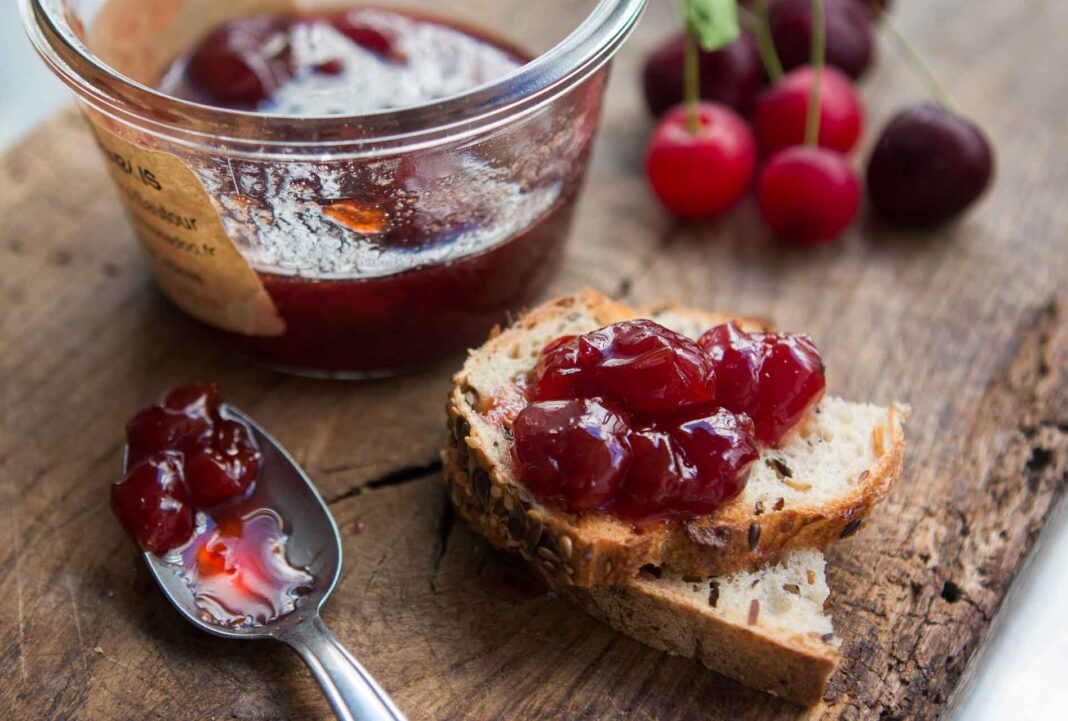
One of the first “recipes” on this blog was No-Recipe Cherry Jam, posted in 2005, which wasn’t quite a recipe. Nevertheless, a lot of people successfully used those guidelines to make cherry jam over the last fifteen years. The basis for it was how I’ve been making jam forever, using 3 parts sugar to 4 parts fruit puree. The standard ratio is to use equal parts sugar to fruit puree but I like to use less.
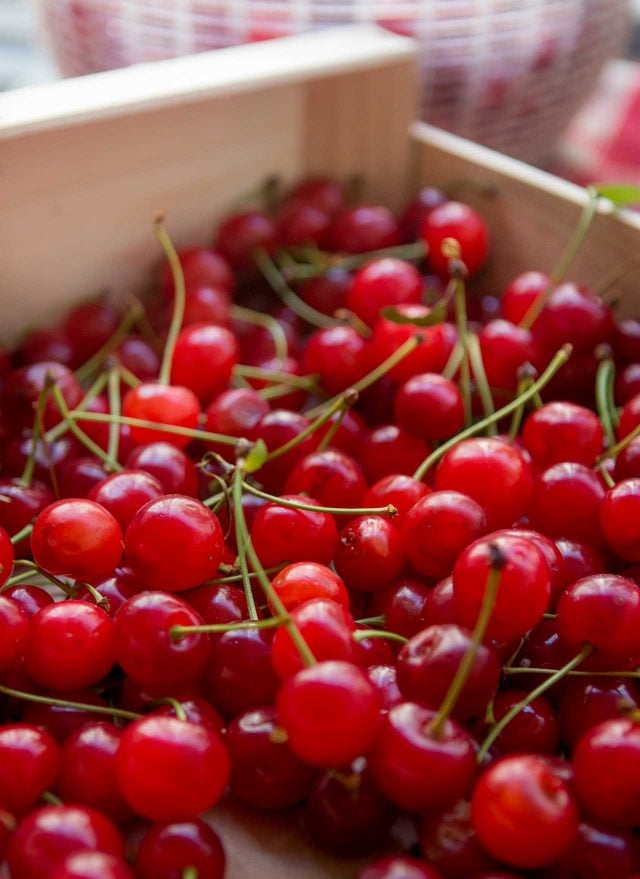
I often make cherry jam with sweet cherries, which are what one usually finds at the market. But if you can find sour cherries, those are wonderful in the mix, but when fresh, they have a short shelf life so should be used, pronto.
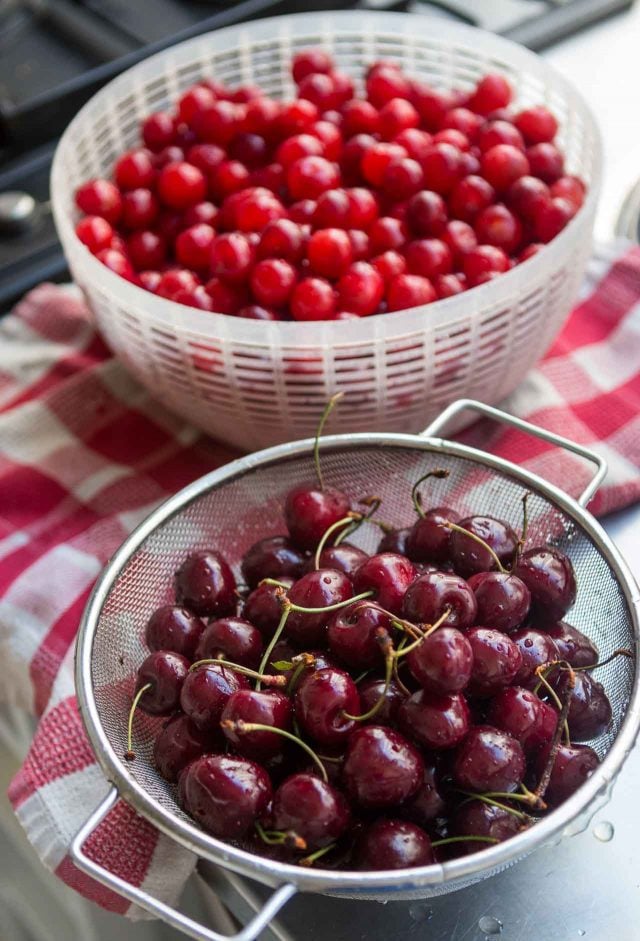
So feel free to mix things up, cherry-wise!
Unlike other recipes, making jam can require a bit of using your instincts, rather than relying on set times and temperatures. Checking the jam texture on a chilled plate is the best way to tell you when it’s done. (As an example, jam usually sets between 218-220ºF,103-104ºC, but this one set a few degrees higher.) Because cherries are low in pectin, this one often “sets” a few degrees higher, although don’t expect cherry jam to be as stiff as other jams that you might be used to, or buy. It’ll be a bit runny, which is just how it should be.
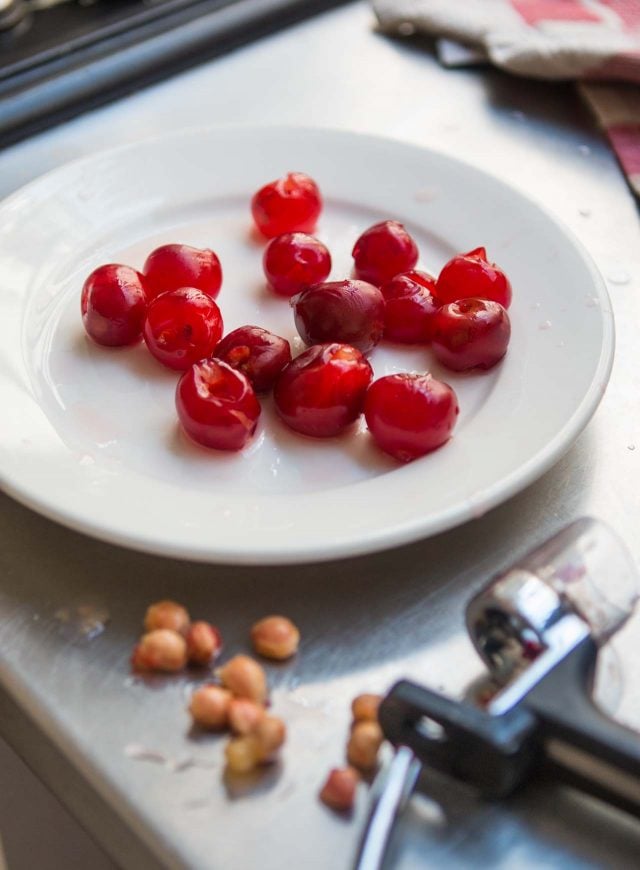
One tool I do recommend is a cherry pitter. Not everyone has one, and they do fall into the “single use” category, but come cherry season, mine gets a good workout. I wrote more about why you should get a cherry pitter here.
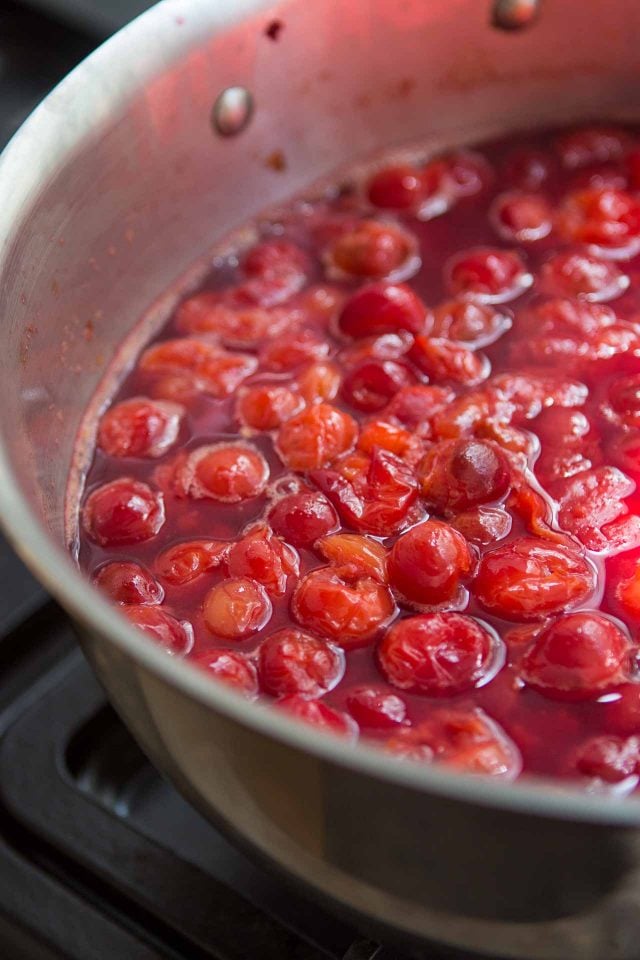
The biggest question I get about jam recipes is people asking about reducing the amount of sugar in them. Sugar in jam does a couple of things. One, it helps the mixture jell, along with any natural pectin in the fruit. And two, it preserves it. If you use less, the jam will be runnier and won’t last as long.
Europeans tend to like their jams runnier than their American counterparts, so in the morning, you can have a European experience when you spoon some of this jam on your morning toast, as we do.
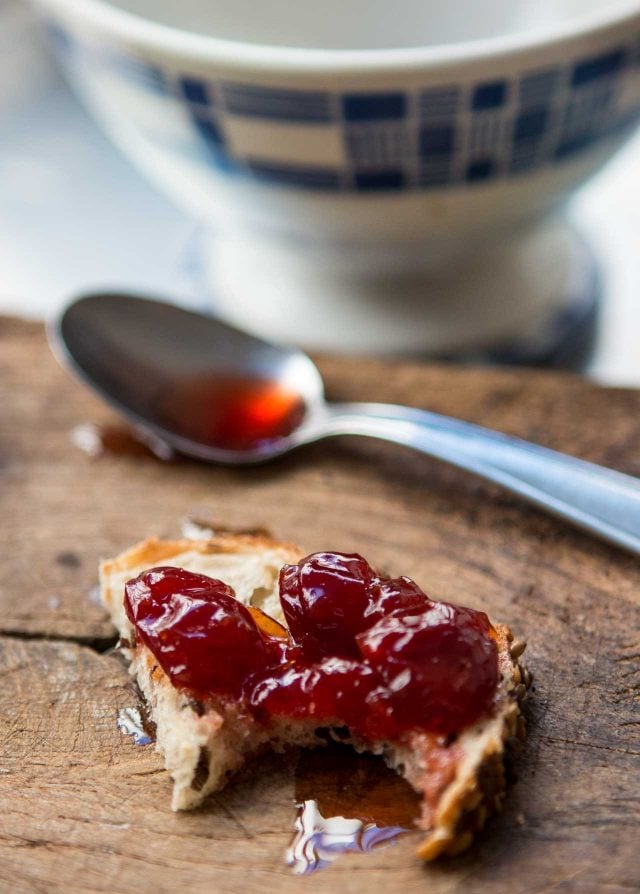
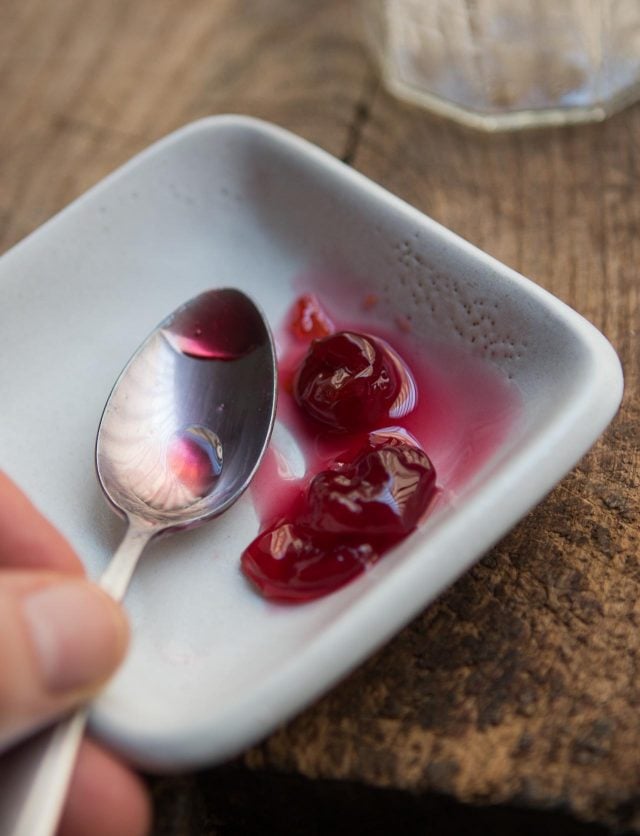
Unlike other jams that wrinkle when you do the wrinkle test (putting a spoonful of jam on a frozen plate, returning the plate to the freezer and when the jam wrinkles with you nudge it, it’s done), this one will be more like thickened syrup. It’s done when it’s thick and sticky and holds its shape for a few moments after you drag a spoon through it (below.) The cherries will be shiny and glossy, like beautiful ruby-colored jewels.
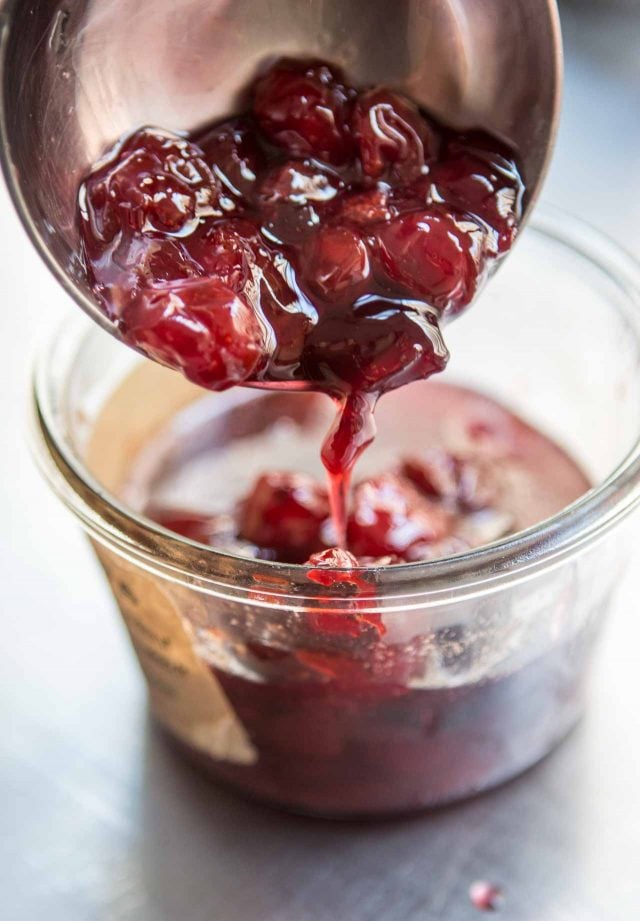
Cherry Jam
If you only have 1 pound (450g) of cherries, feel free to cut the recipe in half. The liqueur is optional but heightens the flavors of the jam. Use only enough so it complements the fruit – you don’t want to overwhelm it. As mentioned, this jam will be a bit on the runny side when “set.” Sour cherries will produce a softer-set jam than sweet cherries.
- 2 pounds (900g) sweet or sour cherries, or a mix
- 2 1/2 cups (500g) sugar
- freshly squeezed juice of one medium lemon, plus additional juice if desired
- 1-2 drops of almond extract , or 1-2 teaspoons of kirsch or another liqueur, such as amaretto or vodka
Prevent your screen from going dark
-
Remove the stems and pit the cherries. Put them in a large non-reactive pot. If using only sweet cherries, add 2-3 tablespoons of water to the pot. (Sour cherries will exude enough liquid on their own so no need to add additional water.) Put a small plate or saucer in the freezer.
-
Cover the pot and cook over medium heat, stirring occasionally, until the cherries are wilted and cooked through, about 10 minutes.
-
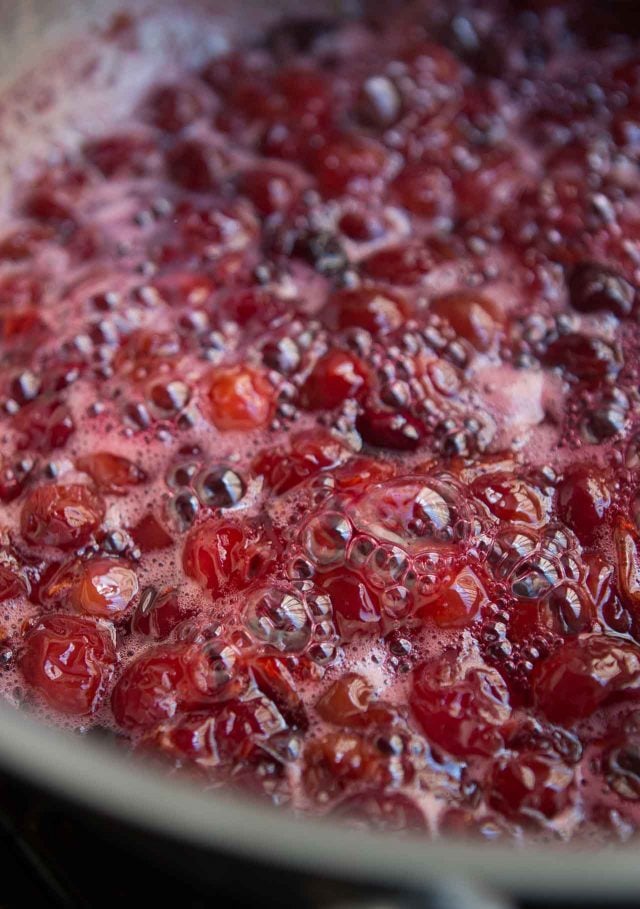
Remove the lid and stir in the sugar and lemon juice. Increase the heat to medium-high and cook, stirring frequently until the mixture thickens. It’s hard to say how long it will take, but when the mixture resembles the sixth picture in the post, the one in the pot with the bubbles, turn off the heat and test the jam by putting a small spoonful on the frozen dish. Return the dish to the freezer for a few minutes until the jam on it is cool. Run a spoon through it and if the liquid is very thick and leaves a clear patch, as shown in the photo in the post, it’s done. If not, return the plate to the freezer and continue to cook the jam, testing it at various intervals, until it’s done. (If you want to use a thermometer to check the jam, it should be ready somewhere between 220º and 225ºF, 104º-107ºC.)
-
When ready, turn off the heat and stir in the almond extract or liqueur (or both, if you wish). If desired, you could add an extra squeeze of lemon juice to balance the sweetness. Ladle into clean jars.