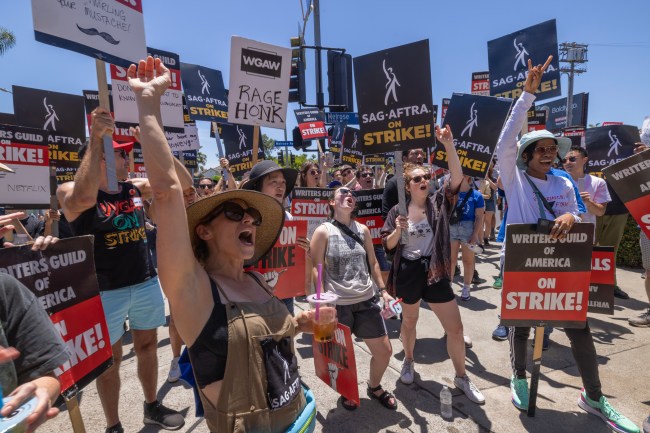
Hollywood unions tend to enter the public consciousness only when something goes wrong. Maybe strikes shut down production on your favorite film or TV show. Then, you see actors who aren’t allowed to promote their own work on the red carpet or to the press. Suddenly, release calendars are collapsing left and right, and hungry audiences in theaters and at home are abruptly left with nothing to watch.
These calamitous moments of industry friction aren’t so much disruptions to the movie and TV pipelines as they are rare glimpses into how the entertainment business actually works. As an indie film artist, understanding entertainment unions and their function matters — even if you never plan on joining one. Because, for all its self-aggrandizing mythology, the modern studio system is just a labor force, and like any workplace, when its employees cease doing their jobs, that’s when the product stops coming.

For impassioned viewers trying to make sense of why movies take so long to fund and to mak, or for fanatical TV experts wondering why seasons keep getting shorter (even on streaming), the transparency provided by unions frequently offers a clearer explanation than the average C-suite press release. Comprised of internally elected union representatives, and nonprofit employees, for the most part, labor leadership broadly shapes how on-set film and TV production work is structured in “mainstream” Hollywood. In theory, using the feedback of these unions’ own members sets cultural standards for artists across the world and ensures creative employment remains a sustainable way to live in the U.S.
The legal protections afforded to entertainment labor unions protect not just the professionals in them, but also the institutional knowledge that can only be accrued by staying in an unstable industry for the long haul. Learning from patterns of abuse and past mistakes has only grown more essential as modern technology redraws the economics of film, television, and digital content in real time.
Revenue models have shifted faster than even A-lister contracts can accommodate, and data privacy remains contested in a fast-evolving landscape that’s increasingly fearful of — and reliant on — A.I. Positions once rooted in Los Angeles are now scattered across continents, but in that churn, several Hollywood unions still function as connective tissue between departments and generations of workers.
Preserving standards that didn’t appear by accident, but through decades of collective negotiation and volunteer works, this IndieWire’s 101 guide to the seven core entertainment labor unions: Screen Actors Guild–American Federation of Television and Radio Artists (SAG-AFTRA); Writers Guild of America (WGA); Directors Guild of America (DGA); the International Alliance of Theatrical Stage Employees (IATSE); the International Brotherhood of Teamsters (Local 399); the American Federation of Musicians (AFM); and the Animation Guild (TAG, Local 839 of IATSE).
As film and TV productions decentralize, and individual career paths fragment, now is the moment to understand the Hollywood infrastructure as it once existed — and where it’s being tested in 2026.
Union vs. Non-Union Productions: What’s the Difference?
A union film or TV show operates under a collective bargaining agreement negotiated between its producers and an official Hollywood labor union, while non-union productions do not. In practice, that distinction shapes nearly every aspect of an artist’s professional experience working on a project — from who can actually be hired, to how long people work, and even who’s at fault in an emergency.
Union productions must follow established legal minimums for pay, overtime, meal breaks, safety standards, and contributions to professional benefits. These rules exist to prevent a race to the bottom between studios, which was an exploitative pattern that long defined Hollywood as an industry where sixteen-hour workdays were common and job security did not exist.
Union contracts also provide grievance procedures, meaning entertainment workers have recourse if the conditions of their employment are violated. To be clear, non-union projects are not inherently exploitative, but they frequently rely on individual creative’s skill for negotiation and a sense of communal goodwill — rather than enforceable legal standards. This can allow for flexibility on ultra-low budget or auteur passion projects, but it also places the burden of protection on the workers themselves.
With studios taking more risks to stay relevant, the key distinction here isn’t creative freedom but scale and sustainability. Note that union agreements can include low-budget tiers designed to accommodate indie efforts, while maintaining their cast and crew’s basic protections. For directors, understanding when a project crosses into union territory can prevent costly mistakes and help you plan ahead.
How Do You Join a Hollywood Union?
There is no single pathway into a Hollywood union, but most follow the same basic principle: You don’t join first, but instead qualify for admittance through your body of work. Meaning, union membership is often triggered by your employment on a union project — not by paying dues or passing an exam.
For cast and crew, this typically means qualifying through a low-budget agreement, waiver, or trainee classification program that you find through your own circumstance. Then, only after a required number of workdays or credits do you become eligible to join your respective union. (Note: Writers and directors generally join once hired on a signatory production, at which point membership becomes mandatory.)
That said, initiation fees and annual dues can be significant, which is why many workers delay joining until it becomes professionally necessary. Joining a union too early can restrict access to non-union work as well — but joining too late can also mean missing benefits that keep you in the game longterm. Ultimately, unions are less about “getting in” than staying in, but luck and timing are always a factor.
Screen Actors Guild–American Federation of Television and Radio Artists (SAG-AFTRA)
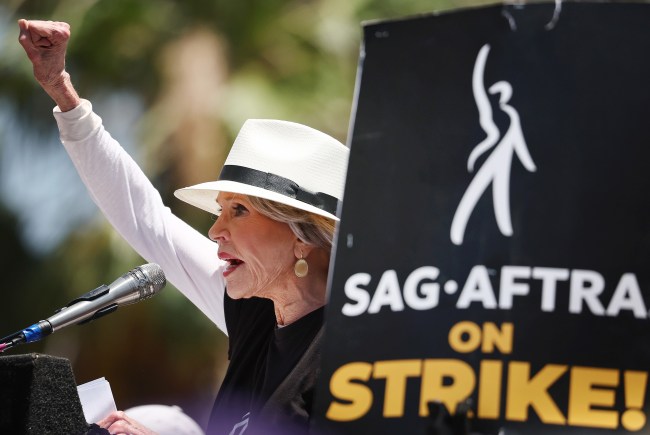
SAG-AFTRA (aka the Screen Actors Guild–American Federation of Television and Radio Artists) represents performers across film, television, streaming, radio, voice acting, stunts, and other on-camera media. Its membership spans A-list movie stars, background actors, social media influencers, and recording artists. Think anyone whose embodied physical labor is reproduced or broadcast for profit.
SAG was founded in 1933 during the Golden Age of Hollywood, when studio contracts often bound actors to strict schedules with limited financial leverage. AFTRA followed in 1937 to represent radio performers, and the two finally merged in 2012 — effectively acknowledging the collapse of traditional media silos and the reality that modern performers typically work across formats.
From stunt regulations to AI protections around digital replicas, the SAG-AFTRA union negotiates minimum rates, residuals, health and pension plans, and safety standards among other issues. Its unified actions tend to be the most visible because actors have a public face, but the SAG-AFTRA influence is deeply structural. Without SAG-AFTRA contracts, productions can struggle to find talent and relevance.
SAG-AFTRA’s tiered agreements are often the first point of union contact for indie filmmakers. They offer lower-budget pathways that still provide protections for actors, while encouraging directors and producers to engage seriously with the ways performance labor is being devalued and threatened.
Read more on the official SAG-AFTRA website.
Writers Guild of America (WGA)
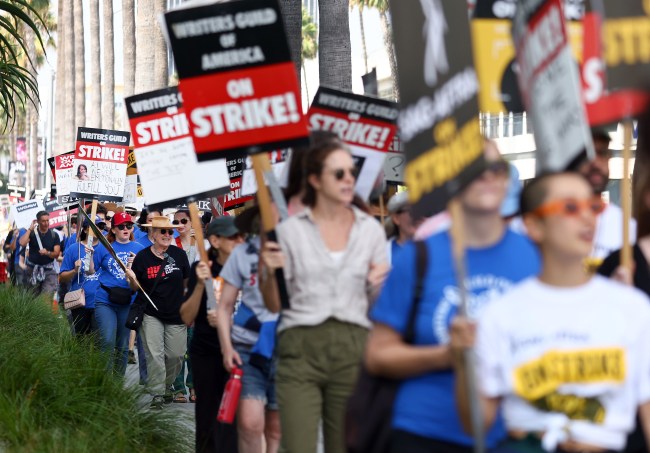
The Writers Guild of America represents film and TV writers, through both its East and West Coast branches. The WGA covers film screenwriters, televisions staff writers, showrunners, and anyone else whose primary contribution is the scripted blueprint of an entertainment project.
Founded in 1933, the WGA emerged alongside the Hollywood studio system itself, as writers pushed back against employers who treated their creativity as disposable raw material. Over the decades, the WGA has been at the center of major philosophical battles defending the importance of art and storytelling — often forecasting cultural upheaval before it became visible elsewhere.
The WGA negotiates minimum compensation, residuals, credit determination, and creative rights when it comes to written work. Its jurisdiction over credits is especially powerful, arbitrating decisions that can shape careers, reputations, and earnings. The guild also administers health and pension plans that help make writing a viable long-term profession. Recent WGA actions have focused on streaming economics, the explosion of mini-rooms, and the erosion of stable TV employment.
Read more on the official WGA website.
Directors Guild of America (DGA)
The Directors Guild of America represents directors, assistant directors, unit production managers, and stage managers who work in the production of movies, TV shows, commercials, and other live media projects. Unlike some creative guilds, the DGA encompasses both artistic leadership and key logistical professionals — reflecting how directing bridges both skills of craft and management.
Founded in 1936, the DGA emerged from concerns over creative control and credit attribution amid the growing power of producers. Its agreements then established minimum salaries for filmmakers, as well as working conditions and the now-standard role of the director as the primary artistic authority on set. The union is known for its relative stability (it rarely strikes), but its contracts are often bellwethers for broader negotiations ramping up… or going south.
The DGA has historically influenced other entertainment unions’ bargaining strategies, and for indie directors, reaching DGA status can mark a serious transition into higher-budget or studio-backed work. Of course, directors’ authority is still contested as production timelines compress in a stressed economy — and creative decision-making become even more data-driven in the era of streaming.
Read more on the official DGA website.
International Alliance of Theatrical Stage Employees (IATSE)
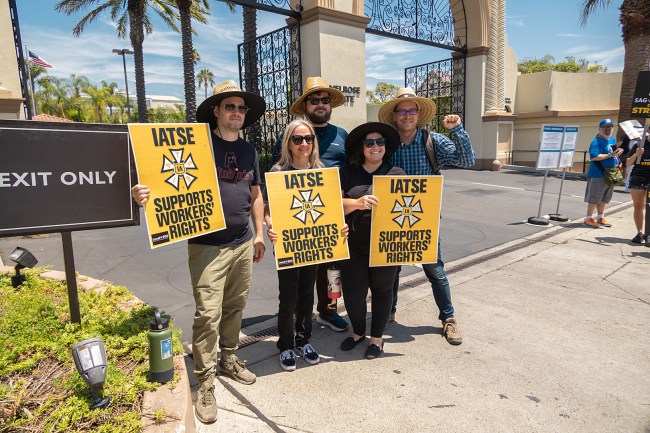
The International Alliance of Theatrical Stage Employees represents the vast network of behind-the-scenes talent that makes production possible. IATSE encompasses cinematographers, editors, costume designers, makeup artists, grips, electricians, set builders, and dozens of other filmmaking crafts — all organized into local union representations specialized to those departments.
Founded in 1893, IATSE predates Hollywood, having originated in live theater before having its practices adapted for film and television. The union’s jurisdiction grew alongside technological innovation, absorbing new responsibilities as film and TV productions evolved on and off screen. Today, IATSE negotiates wages, hours, safety standards, and career benefits, often fighting against the punishing schedules and burnout that doesn’t always register with more public-facing employees at the top.
In 2021, the IATSE contract standoff brought unprecedented attention to working conditions below the line and revealed how unsustainable demands had become normalized across Hollywood sets. The group continues to shape budgets, crew expectations, and timelines — drawing out why entertainment labor issues that aren’t visible to viewers can sometimes be the most urgent and dire.
Read more on the official IATSE website.
International Brotherhood of Teamsters (Local 399)
Teamsters Local 399 represents drivers and transportation professionals in Hollywood, including set drivers, location managers, and casting associates. Though smaller in public profile, its impact on the daily world of Hollywood is immense. Without transportation, the show can’t go… anywhere.
Founded as part of the broader Teamsters union, Local 399 became indispensable as productions expanded across Los Angeles and into the broader U.S. Its members move cast, crew, and filmmaking equipment, while their union representatives negotiate pay, hours, turnaround times, and safety regulations. That’s crucial especially when it comes overnight shoots.
Read more on the official Teamsters Local 399 website.
The Animation Guild (TAG)
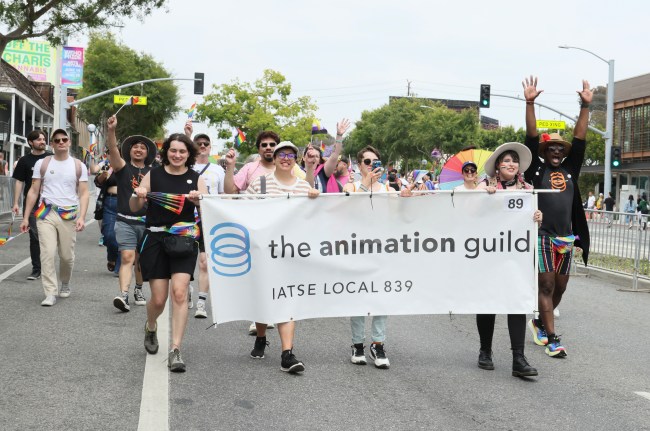
The Animation Guild, Local 839 of IATSE, represents artists, writers, directors, and technicians who create through animation. Its members include storyboard artists, character designers, animators, animation writers, and more people whose work straddles visual art and technology.
Founded in 1952, during a period of employee unrest at Disney, TAG emerged to protect creative workers who were too often dismissed as technicians or low-level laborers. Over time, the guild became a crucial advocate for animation as a distinct artistic discipline — negotiating wages, benefits, and work classifications (which became particularly vital as animation expanded across streaming and gaming).
TAG members have been at the forefront of debates around labor outsourcing, as well as AI-assisted productions workflows, and the erosion of personal IP ownership. For indie artists, there’s a growing overlap between animation and live-action production that’s worth watching closely.
Read more on the official Animation Guild website.
American Federation of Musicians (AFM)
The American Federation of Musicians represents instrumental musicians — who work not only in recording sessions but also on film and television scores, live performances, and digital media. Its members range from orchestra players to celebrity composers.
AFM was founded in 1896, fighting early battles over recorded music as it swiftly surpassed live performance labor. That concern echoes loudly in today’s union debates as the group negotiates session fees, reuse payments, and residuals tied to infinitely re-playable musical performances. AFM contracts govern film and TV scoring, making it central to how music is produced and compensated for productions. Union scoring can elevate professionalism, but its music requires indie projects to budget.
Read more on the official American Federation of Musicians website.
