
With the Warner Bros. sale threatening to end the Hollywood studio system as we know it, movie theaters have never felt more sacred. The brick-and-mortar businesses many of us treat like religious institutions could eventually shutter in record numbers if Netflix’s proposed, paradigm-shifting deal goes through. That’s a scary thought dependent on a whole lot of hypotheticals, but the theoretical doomsday is a strong reminder for moviegoers to find community that’s small and local.
If you talk to people working at the ground level of theatrical exhibition, you’ll hear something surprising: Not all the news is apocalyptic. In fact, as the macro picture gets messier, the micro scene is thriving.

“We are experiencing an upward explosion in the growth of microcinemas in the United States,” said American Genre Film Archive (AGFA) theatrical sales director Bret Berg, whose day-to-day work puts him in direct contact with traditional arthouses, multiplexes, and scrappy subcultures across the country — including more and more microcinemas.
These pocket-sized theaters are built on a distinct but familiar small-business foundation with a complementary cultural philosophy at their core. At each, a handful of curators who want to see something “cool” in their neighborhood band together to build a venue themselves precisely because no one else will. These theaters are easier to sustain if they’re attached to bigger businesses: think rental stores, arts community centers, or mid-sized theatrical venues. But to get going, shared interest is all it takes.
“It’s unprecedented,” Berg said of the microcinema boom as he sees it. “Right now is the time to try it because there’s never been access to more bookable restored films. There’s never been as many places willing to show and sell repertory movies. There’s all this gamification and FOMO through Letterboxd, and studios are making fewer new films, so there’s less interesting competition. Audiences, especially younger ones, came out of lockdown hungry for something real.“
The result is a hopeful paradox. As large theaters and theatrical chains contend with one of their most uncertain chapters (Berg stressed that movies are still a “profitable” business model, no matter what Netflix CEO Ted Sarandos says), microcinemas could be entering their own golden age.
A Boom Happening Where You’d Most Expect It
Long considered oversaturated with film exhibition options, Los Angeles suddenly has a handful of new microcinemas, where a decade ago there was essentially one: Echo Park Film Center. Now, there’s Whammy!, the back rooms at Vidiots and the Vista, Cinefile Video’s screening space, Eastwood Performing Arts Center’s flexible screening rooms, and more locations throughout the SoCal city.
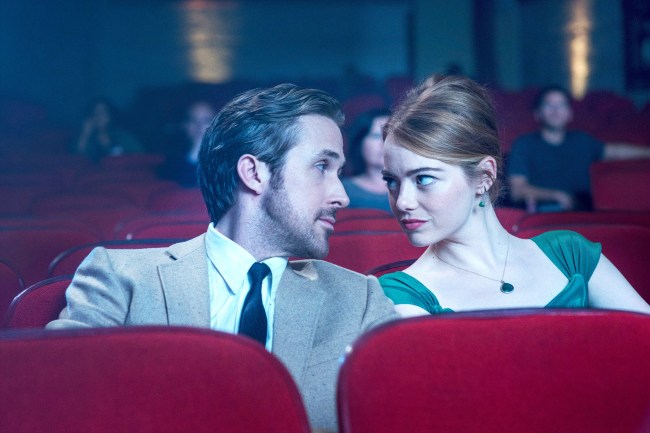
“We went from one and a half to five or six all of a sudden,” said Berg. “Then, it kept growing.”
The trend isn’t limited to LA. Berg lists Sacramento’s Dreamland Cinema, Seattle’s Beacon, New York/Queens’ Low Cinema (co-founded by filmmaker and beloved documentary icon John Wilson), Dallas’s Spacy, and South Carolina’s Babylon Kino as just a few of the microcinemas redefining repertory access in the United States. As film culture morphs to battle against the relentless noise of advertisements and other brand storytelling online, not just younger audiences but demographics of all kinds are flocking to experiences that are special and nostalgic.
“That’s what’s happening everywhere,” Berg said. “Someone wants to see more of what gets them excited. And instantly, they’re able to galvanize community support because people really want it.”
As Berg sees it, the rising interest in microcinemas isn’t driven by tech so much as exhaustion with it. Although plenty of older film buffs wrongly assume the TikTok generation can’t disconnect long enough to sit through a feature-length movie, Berg reports seeing the exact opposite whenever he hosts his weekly screenings at Alamo Drafthouse in Downtown LA.
“I do not see anybody waving around their phone,” he said. “People gladly enjoy a moment where they are not doing that. In the coming months and years, I think there’s going to be a wave of people who are seriously just like, ‘Fuck all of this.’ Microcinemas are community hubs even more so than the traditional arthouse or multiplex because they demand a level of personal engagement specific to their size, and people want that.”
There’s an emerging cultural consensus across Gen Z, millennials, and older audiences that the digital age has created a barrier to connection. That shared discomfort is translating into a renewed appetite for in-person ritual, whether it’s sing-alongs, midnight showings, or deep cuts not available online. Young kids are leading a surprising part of that charge, and Berg cites the eventized box office success of mainstream films, from “Five Nights at Freddy’s 2” to “A Minecraft Movie,” as proof that children and teens want to get away from their tablets and phones.
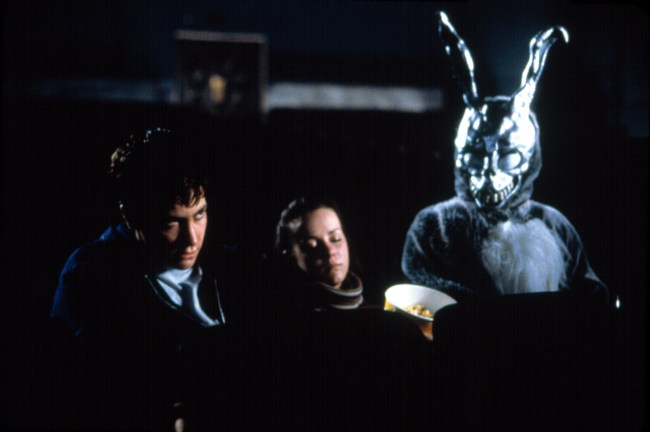
“I think they pray for a thing that will yank the screen time away from them for a couple hours,” Berg said. “So many of them are begging for places and events that will allow them to do that, and movies do.”
Read IndieWire’s interview with 26-year-old Hannah Hockman, who restored a historic indie movie theater in her Florida hometown and shared those sentiments earlier this year.
What Happens to Local Movie Culture If Theaters Collapse?
If Netflix’s proposed acquisition upends theatrical distribution norms — shrinking release windows further, consolidating the storied Warner Bros. catalog, or otherwise jeopardizing availability across the U.S. and globe — the consequences could be dire for the arts and creative economy. But microcinemas are uniquely positioned to adapt, in part because they already operate outside the industry system that’s most at risk.
Major studios don’t deal directly with microcinemas at all. Instead, these venues exist within the largely invisible world of “non-theatrical” exhibition, licensing films through clearinghouses like Swank Motion Pictures or directly from independent distributors. The distinction isn’t aesthetic so much as mathematical, and the financial formula that determines that divide at locations across the country is based on more than seating capacity. Per Berg, the total box office potential of a cinema depends on a number of factors, including whether its theater or theaters have fixed seatings and daily showtimes.
That separation places microcinemas in a different economic universe, one that doesn’t rely on blockbuster opening weekends or shareholder-driven growth to justify its existence. At AGFA, Berg works directly with microcinemas to make that math viable. Instead of charging flat fees divorced from reality, he prices screenings based on a venue’s seating size and ticket price. “If you tell me your ticket price and how many seats you have, I can make sure you won’t lose money,” he explained. “I don’t discriminate between a thousand-seater and a 20-seater. It’s the same business and expertise for me.”
In practical terms, a sold-out screening is the goal that microcinemas want to routinely meet. In a space with 50 or fewer seats, one strong showing could theoretically be enough to break even — especially when licensing fees are scaled appropriately, and microcinemas are grafted onto already successful local businesses. Consistent near-capacity attendance and a reliable base of repeat patrons are strong indicators of health that can turn cultural anchors into real revenue, if not standalone profit engines.
That flexibility does more than keep the lights on. It lowers the stakes enough to allow for programming risk: forgotten archival selections, arthouse programming, and films with no clear commercial upside can thrive at this level. Those are the very things that tend to disappear first when cinemas struggle nationally. A vestige of authentic counterculture, microcinemas will not replace the mainstream theatrical system outright, but they offer a compelling alternative.
Could a New Underground Film Movement Be on the Way?
If the studio structure fractures, that flexible, survival-oriented model becomes even more important. The country has faced countless striking collisions between major cultural and technological forces, but conflict in the entertainment industry hasn’t seemed so politically grim since the 1960s.
Back then, small, self-run screening rooms became home to experimental films, queer cinema, and avant-garde work targeted by censorship. We’re seeing a version of the same thing now as major television networks battle legal action from the Trump administration. Meanwhile, following federal budget cuts, public access programming is going dark across the nation.
“I think the people starting new screening spaces feel a moral imperative,” Berg said. “Post-lockdown, people were breathing a sigh of relief [that] they could just go out and attend something. This is the platonic ideal of that at a time that’s tumultuous. It’s a local business wave primarily focused on art for art’s sake, offering a service we really need.”
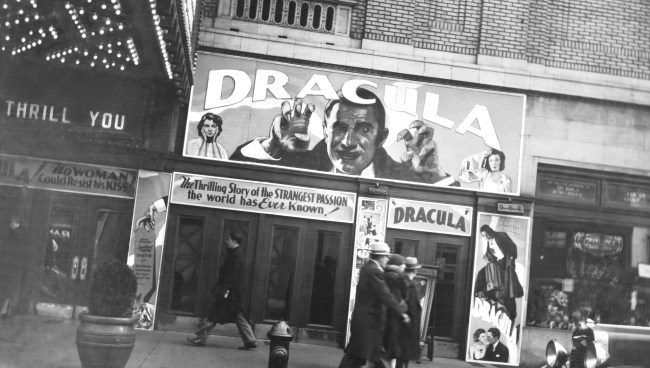
What about a world where you can’t get to a microcinema? Online, Berg hosts the Museum of Home Video — a lively community of cinephiles as invested in cultural exploration as the AGFA theatrical sales director — through an independently owned website. The cinematic appetite that once expressed itself through Twitch live streams during lockdown (now hampered by increased policy restrictions and widely enforced copyright bans) has died down.
“That had a golden era, which I feel is over,” Berg said. “A lot of the movie streamers I knew that started when I started on, they’re all gone now, for one reason or another.”
That said, it hasn’t entirely disappeared, and unconventional screening settings — in-person or online — can become their own PR engines, driving cinephiles toward discovery. There’s always the possibility that a new, groundbreaking way to present cinema could emerge and change how audiences use movies to inform their personal connections. That audience could theoretically grow out of sheer necessity if censorship gets much worse in the U.S. But even as concerns rise across the political spectrum and the instinct to preserve collective access to media intensifies, Berg doesn’t predict the same kind of cultural surge for unauthorized screenings he sees for the future of microcinema.
“It’s too easy for distributors to look up a venue’s Instagram account and see what they’re advertising,” he said. But do it the right way? “The timing couldn’t be better. There’s unprecedented access to restored films, growing interest from all ages of audiences, and a hunger for communal experiences that’s getting worse because of streaming. There’s a genuine demand for curated spaces.”
